
Wars. Oil shocks. Missiles flying across the Middle East. Normally, when chaos hits this hard, every risky asset gets absolutely demolished. Yet here's Bitcoin, sitting pretty near $73,500 like nothing happened. What's going on?
When the Bombs Started Dropping
Let me paint you a picture of this past weekend.
Saturday morning, February 28, 2026. The US and Israel launched coordinated strikes on Iran. Within hours, Iran fired back—missiles hitting American bases in four countries. Oil tankers got hit near the Strait of Hormuz, the narrow waterway that handles 20% of the world's oil supply. Over 200 ships just… stopped moving. Too scared to sail through.
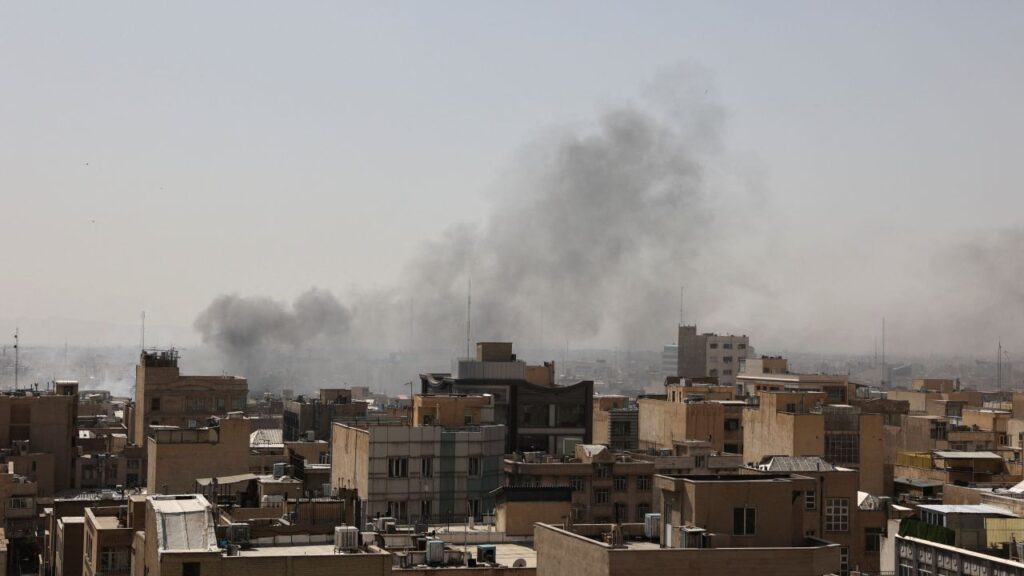
Oil prices? Shot up 13% overnight. Brent crude is now flirting with levels we haven't seen since the energy crisis. That narrow strait that everyone depends on? Currently a war zone.
This is the kind of chaos that makes investors run screaming for the exits.
Bitcoin's Weird Reaction (That Nobody Expected)
Here's where things get interesting.
Bitcoin initially did what you'd expect—it tanked. Hard. Dropped from $68,000 to $63,000 in less than an hour. Over $522 million in leveraged positions got liquidated. 154,000 traders were wiped out. Classic panic selling.
But then something strange happened.
Instead of continuing the freefall like it “should have,” Bitcoin… bounced. By March 13, it rose over $73,500 and is now trading around $73.500. Not back to where it started, but way better than anyone expected during an actual shooting war in the Middle East.
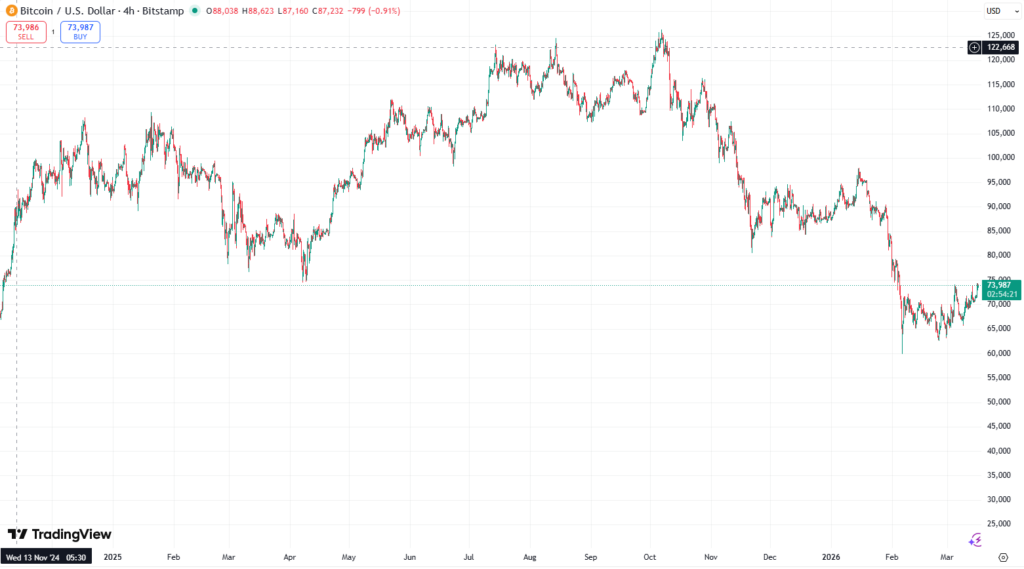
Compare that to past geopolitical shocks, and you'll see why people are confused. When Russia invaded Ukraine in 2022, Bitcoin crashed and took months to recover. When COVID hit in March 2020, BTC dropped 50% in two days.
This time? Bitcoin ate a punch, stumbled, and got right back up.
The Two Stories People Are Telling
Right now, the crypto world is split into two camps, and they're both looking at the exact same data.
Camp #1: “Bitcoin Is Still Just a Risky Tech Stock”
This group says hold on—Bitcoin absolutely DID crash when the bombs dropped. It fell 8% in hours!
Their logic goes like this: Rising oil prices → inflation fears return → central banks keep interest rates high → expensive money kills risk assets → Bitcoin dies.
And they've got a point. Bitcoin still trades like a tech stock during market hours. When the Nasdaq sneezes, Bitcoin catches a cold. The correlation is real.
Moreover, Gold jumped 2% during the same chaos. Actual safe haven assets went UP. Bitcoin went down (at first). That's not exactly “digital gold” behavior.
Camp #2: “Bitcoin Just Passed Its Biggest Test Yet”
But the other side sees something completely different happening.
They're not looking at the initial crash. They're looking at the BOUNCE.
Think about what just happened: The US entered direct military conflict with Iran. One of the world's most critical oil chokepoints became a war zone. Traditional markets were closed all weekend, so there was nowhere to run except… Bitcoin.
And Bitcoin held $63,000. Didn't collapse to $50K. Didn't spiral into a death loop. Just absorbed a massive geopolitical shock, shook it off, and climbed back.
“That's not a bug,” they say. “That's a feature.”
They are saying: Bitcoin has a fixed supply (21 million, forever). It's borderless—doesn't care about sanctions or frozen bank accounts. And unlike gold, you can actually move it instantly across the globe.
During a shooting war, that matters.
What the Smart Money Is Doing
Let's look at what's actually happening behind the scenes, because the data is wild.
While retail traders were panic-selling during the crash, something interesting was going on with the big players. Spot Bitcoin ETFs—the Wall Street gateway to crypto—saw massive institutional money BUYING the dip, per Bitwise CIO Matt Hougan.

Whale wallets (addresses holding 1,000+ BTC) were accumulating. Not selling. Accumulating.
Even weirder: Iran has $7.8 BILLION worth of crypto activity running right now. Their government is literally using Bitcoin mining to bypass sanctions and fund military operations.
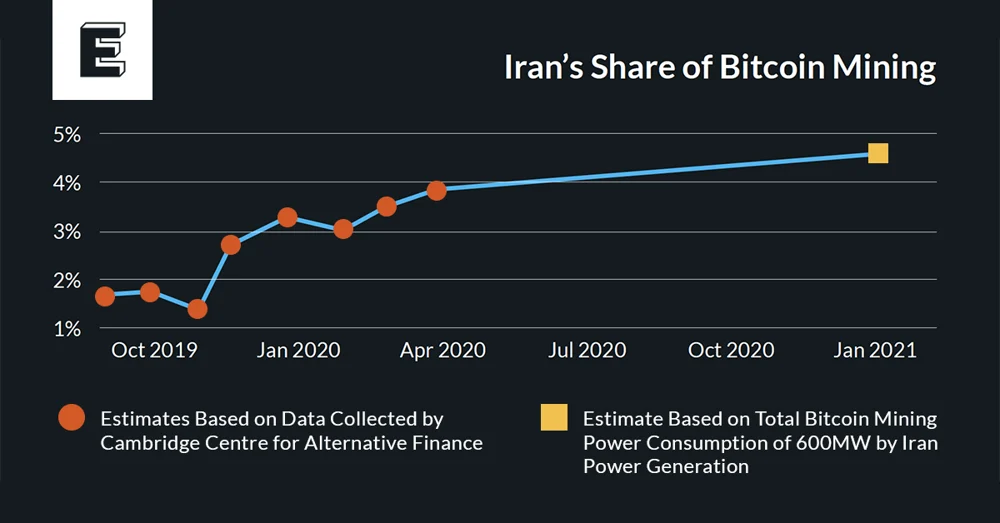
The narrative is shifting from “Bitcoin crashes during chaos” to “Bitcoin survives chaos better than expected.”
The Real Question Nobody's Asking
Here's what keeps me up at night:
We're watching something happen in real-time that might be historically significant, and most people are too busy watching the 1-hour chart to notice.
Every major global asset class had its moment where it proved its worth during a crisis. Gold did it in the 1970s when inflation exploded and Nixon killed the gold standard. The US dollar did it after World War II when the entire world needed a stable reserve currency.
Maybe—just maybe—Bitcoin is facing its own crucible moment right now. A real-world stress test with actual bombs, actual economic sanctions, and actual geopolitical chaos.
And it's… not collapsing.
Is it trading perfectly? No. It's volatile as hell. But “volatile and surviving” is very different from “dying.”
The Bottom Line
Look, I'm not saying Bitcoin is suddenly the world's safe haven. That's not what the data shows. It still crashed when the missiles flew.
But here's what I AM saying: Bitcoin is absorbing shocks that should, by all traditional logic, kill it. Wars. Sanctions. Oil crises. Bank failures. Government crackdowns.
And yet, it keeps coming back.
The world is watching whether Bitcoin is just another risky tech asset that'll eventually fade away… or whether it's quietly becoming something bigger. Something that gets stronger during chaos, not weaker.
Every financial system reveals its true nature during a crisis.
Maybe Bitcoin is revealing something right now that most people won't understand until years later.
So here's the real question: Is Bitcoin still a risk asset that crashes when scary things happen… or is it slowly becoming the thing people run TO when the world feels unstable?
The answer might determine the next decade of global finance.
And we're finding out in real-time.
Resources
Bitcoin price action on TradingView
Report by CoinDesk: Bitcoin nears $63,000 as U.S. and Israel launch strikes on Iran
Report by NEWSBTC: Bitcoin Dip Has Institutions Scrambling To Buy, Insider Reveals
Report by Irantl: Iran crypto volumes draw US probes into sanctions evasion – Reuters
Report by Elliptic: How Iran Uses Bitcoin Mining to Evade Sanctions and “Export” Millions of Barrels of Oil